Senior Women Say Wear Lipstick!

Paradise Village Retirement Community is home to the Ms. Senior San Diego Pageant!“Wear Lipstick.” This is about the craziest advice for living well given to senior women that I have seen, but in a way it makes perfect sense. A scientific example of this was given in a Harvard study which found that women who thought they looked younger after a visit to a salon actually had a drop in blood pressure. Anecdotally, a recent interview of vibrant women entering their 11th decade – yes, 11th decade – with vigor and spirit found a similar thread in the consensus of the group – that self confidence is a marvelous thing and a little vanity is good for you.

We have seen this same phenomenon on our senior living campus too. To the delight of everyone, Paradise Village Retirement Community has the privilege of calling itself home to the Ms. Senior San Diego Pageant. This event honors women in the ‘Age of Elegance’ who best portray dignity, maturity, and inner beauty, and is intended to inspire all of us to live a full, balanced, and vivacious life. One cannot help but feel that this group of gracious, fit, happy and social contestants, lives by the ‘Wear Lipstick’ philosophy.

This leads to the thought that of course it is not really about makeup and it’s not about being model perfect or conforming to guidelines that do not fit us. The senior women who offered their insights on living well were talking about enhancing who we feel we are, about recognizing within ourselves something worth celebrating and something worth sharing. Their insights, summed up by the idea of wearing lipstick, were full of approaches to feed your soul, indulge in yourself, generate positive energy and grow confidence.

So there it is. Feel beautiful. It is key to a long and wonderful life.

Proud of our Neighbor…In January, Paradise Valley Hospital Recognized Among Top 15 in Nation

What a blessing for a Retirement and Assisted Living Community to be located adjacent to such a quality medical facility!

National City, CA – Jan. 24, 2012 – Paradise Valley Hospital and Alvarado Hospital Medical Center were recognized this week as part of the only hospital system—Prime Healthcare—in California named one of the nation’s top 15 by Thomson Reuters, a leading provider of information and solutions to improve the cost and quality of healthcare.

The prominent award is based on objective criteria such as clinical outcomes, patient safety, patient satisfaction and operational efficiency.

“Our healthcare system excelled even in this elite group,” said Luis Leon, CEO of Alvarado and Paradise Valley hospitals. “We have long been proud of our clinical quality, but now San Diegans can see that the high level of quality care, better survival rates, fewer complications and better patient safety provided to our patients has been validated by an outside source based on federal data.”

Researchers from the Thomson Reuters “100 Top Hospitals” program analyzed the clinical quality and efficiency of more than 300 health systems to identify the top 15 in the nation. The study found that regardless of their size, the top health systems shared many of the same qualities, including:

Lower 30-day mortality rates
Better survival rates
Fewer complications
Shorter hospital stays
Better patient safety
Core measure adherence

In fact, top health systems had 23% fewer adverse patient safety events than expected and had better adherence to core measures of care than their peers.

Prime Healthcare, which operates 14 hospitals in California and one in Texas, ranked higher than the other 21 health systems in California and the more than 30 other health systems on the West Coast.

The study used the 2010 Medicare Provider Analysis and Review (MedPAR) and the CMS Hospital Compare data sets to examine health systems with two or more short-term, general, non-federal hospitals; cardiac and orthopedic hospitals; and critical access hospitals.

To Itemize or Not, That is the Question

Many seniors have gotten into the habit of claiming the standard deduction instead of itemizing. That’s because they typically pay little or no mortgage interest, and they usually don’t owe much for state and local income and property taxes either. So the most common itemized deductions for the rest of us often amount to little or nothing for seniors. Plus folks age 65 and older get larger standard deductions. All that said, claiming the standard deduction may not be the right answer if you have significant medical expenses.

As you probably know, medical expenses can only be deducted to the extent they exceed 7.5% of your adjusted gross income (AGI). In adding up your expenses, don’t make the common mistake of forgetting to count Medicare insurance premiums. Together with other out-of-pocket costs, Medicare premiums can easily put you over the 7.5%-of-AGI threshold and also cause your total itemized deductions to exceed the standard deduction amount. Here’s the drill to find out if you can cut your tax bill by itemizing.

Step 1: Identify Expenses that Count as Medical Expenses.


To figure out if you have enough medical expenses to benefit from itemizing, add up the following.

  • Premiums for Medicare Parts B, C, and D Coverage. Seniors enrolled in Medicare can count premiums for Medicare Part B coverage (for medical costs other than hospital bills), Part C coverage (for Medicare Advantage policies), and Part D coverage (for prescription drugs) as medical expenses. *For most people, the 2011 Part B premium is $1,157 per covered person, but it can be up to $4,429 per person for higher-income folks (the 2012 premiums will be a bit higher, but we don’t have the exact numbers yet). *Part C premiums depend on the plan. *Part D premiums average around $360 per covered person for 2011 (and will probably be about the same for 2012).
  • These Medicare coverage premiums are generally withheld from your SocialSecurity benefit payments. If so, you can find the premium amounts for each year on Form SSA-1099 (Social Security Benefit Statement) which you should receive shortly after the end of each year.
  • Premiums for Supplemental Medicare Coverage (Medigap Insurance)
  • Seniors can also count premiums paid for private Medicare supplemental insurance policies — often called Medigap coverage — as medical expenses. The cost depends on the plan, but annual premiums can easily amount to $1,000 to $2,000 per covered person or more.
  • Premiums for Qualified Long-Term Care Coverage
  • Premiums for qualified long-term care (LTC) insurance also count as medical expenses, subject to age-based limits. For each covered person, count the lesser of: (1) the actual premiums paid in 2011 or (2) the age-based limit from below: Age on 12/31/2011 – Maximum Premium Amount 61-70 $3,390. Over 70 $4,240
  • Out-of-Pocket Medical Expenses
  • Many seniors also incur significant out-of-pocket outlays due to insurance co-payments and deductibles and for dental and vision care. Be sure to add these into the mix.
  • Medical Expenses Paid for Relatives
  • Did you pay health premiums or uninsured medical expenses for a qualifying relative this year? If you did, count these expenses, too. For a person to be your qualifying relative, you generally must pay over half of his or her support for 2011, and the person must be your adult child, son-in-law, daughter-in-law, grandchild, father, stepfather, father-in-law, mother, stepmother, mother-in-law, brother, stepbrother, brother-in-law, sister, stepsister, sister-in-law, aunt, uncle, niece or nephew. It doesn’t matter if the relative lives with you or not.


Step 2: Add Everything Up and Subtract 7.5% of AGI


As earlier, you can only claim an itemized medical expense deduction to the extent your total expenses exceed 7.5% of adjusted gross income (AGI). For example, say your 2011 AGI is $80,000, and you have $20,000 of medical expenses from the preceding expansive list, deduction is $14,000 [$20,000 -- $6,000 (7.5% of your $80,000 AGI)].


Step 3: Add in Other Itemized Deductions and Compare to Standard Deduction


Now that you’ve learned you can claim a significant itemized deduction for medical expenses (even after subtracting 7.5% of AGI), the next step is to identify any other potential itemized deductions for 2011. These can include (among other things):

  • State and local income and property taxes (including taxes on cars, boats, and other personal property).
  • State and local general sales taxes (but only if you choose to claim them instead of claiming state and local income taxes).
  • Home mortgage interest (if any).
  • Charitable contributions


Add these to your medical expense deduction, and see if the total exceeds your 2011 standard deduction amount of $7,250 if you are aunmarried and will be 65 or older as of 12/31/11 or $13,900 if you file jointly, and both you and your spouse will be 65 or older as of 12/31/11.


Be sure to contact a trusted, experienced tax advisor to find what’s right for you!

95-year-old Paradise Village Original Tuskegee Airman Proud of Impact and Accomplishments

Colonel Louis Hill, Retired Air Force, says he has a unique story.  Hill is an extremely modest man with life experiences that would impress anyone, though he states, “I’m no one special.”   Hill lives by his father’s expression, “Do the most good for the largest number.”

Hill was raised by his parents, both college graduates, which was a feat in their day.  He was the seventh of eight children, all whom went to college as well.  Growing up in the South at that time had its challenges.  Regarding segregation, Hill believed that “five percent of the population was in favor, another five percent against, and the balance just went along to get along.”  It was not until age 16 that Hill was told “Go to the back of the bus!”  Hill humorously added, “mainly because they did not have buses in my hometown.”  He later married his college sweetheart Ecra Yvon Jett, and they had beautiful daughters Myrna E. Hill and Ecra Elaine Hill.

Hill taught high school following his Bachelor’s Degree in Chemistry and Mathematics fromAlabamaStateUniversityin 1938.  He was deferred for entry into the military at that time.  In 1942, he was drafted as a “buck” Private at the age of 26.  Three months later he found himself in officer’s training and three months later a new 2LT officer in the Army Air Corps.  His goal was to get to the Tuskegee Project which was formed in 1941 from political and social pressure, though he never formally submitted an application to the program.  He made himself a nuisance in his pursuit, and was transferred 16 times before landing in the exact place he wanted to call his military home at the Tuskegee Army Airfield in September 1943.  The Tuskegee Airmen were training to becomeAmerica’s first black military pilots in segregated units.   Eleanor Roosevelt was a major champion of the Project, telling her President husband “those men can fly!”

Hill was 26 years old joining this testing ground and was called “The Old Man” in the group.  He chose not to apply as a pilot, but rather wanted to work others through the program—a mentor and educator at heart.  He worked in Cadet Classification in the Psychological and Motor Skill Testing Sections.  His job was to ensure the program was successful by screening for candidates who were both stable and could withstand extreme stress.  The personality and Psych tests, and the pressure to become two to three times as good as non-black counterparts, were key to the viability of the project.  Hill was most proud of the caliber of candidates and colleagues he worked with atTuskegee.  Black enlisted men were what Hill described as “extraordinary.”  They were men of character and ambition with Master and Doctoral degrees, but were not seeking entry into the officers’ ranks at that time.  At the beginning of the project, only five black pilots graduated the first year.  Just before military segregation ended, 940 fighter pilots graduated in total.  Tuskegee Airmen were considered any service man or woman that took part in any aspect of the fighter group, not just the pilots.  Hill firmly believed that war was transitory and they would win the war.  He taught and encouraged all he worked with to develop marketable skills to use following in peacetime. 

The Tuskegee Airmen broke through a barrier of ignorance and proved that black men would handle themselves equally among the officers’ ranks, as brave countrymen, and outstanding aviators.  Respect came from white fighter pilots who showed appreciation by nicknaming the black airmen the “Red Tail Angels.”  These white pilots knew they were led to successful missions and safely returned back to base as a result of the black unit’s skill and bravery.  The Army Air Corps’  332nd Tuskegee Fighter Group and its four squadrons (the 99th, 100th, 301st, and 302nd) were commanded by West Pointer COL Benjamin O. Davis, Jr. who was an honors graduate, but endured discrimination and isolation by peers at the Military Academy all four years. 

The war ended in 1945.  Hill discovered his strengths, expertise and leadership in Logistics.  He was transferred to Hawaiiand joined a group to prepare a separate location for the 477th Bombardment Group.  Hill didn’t have enough points to make him eligible to get out of the service.  There was an effort, where possible, to have black officers command black companies.  In 1945, Hill deactivated these seven companies, and then activated the 10th Air Ammunition Squadron, and commanded as a Captain.  He was quite proud, and rightly so, of their deficiency-free distinction.  It was not until 1946 when Hill would be accepted as equal and received officer’s housing.  In 1947, the United States Army Air Corps became the Unites States Air Force.  In 1948, full integration occurred in theU.S. military. 

Further along in Hill’s service he became a staff officer at the fighter wing headquarters in Columbus, Ohio.  Four black fighter units and one bomber unit transferred to Ohioand were nicknamed “The Black Air Force,”  Hill worked with an inspiring group of officers who shared his philosophy to lead and mentor.  Later, Captain Hill was chosen to go on to AdvancedOfficersSchooland graduated in the top 10 percent.  He was one of the first black officers and the only representative from the newly formed Air Force at the time.  Hill moved on to Strategic Air Command and was promoted later to Integrated Major.  He transferred to Englandand commanded the 3918th Maintenance Supply and Services Group.  Major Hill always pushed for mainstreaming his career as a military officer.  When asked about leading “Red Necks,” Hill stated, “I have no problem with them.  They will be the ones with a problem.”   Hill served in many other positions and locales in the service.  In 1964, Hill was promoted to Colonel.  His career in Air Force Logistics continued as Deputy Wing Commander for the 6200th Material Wing in support of all ofSoutheast Asia.  Hill was ultimately assigned to Aerospace Defense Command as Commanding Director of Supply and Services for all radar sites of the world, as he managed four billion dollars of inventory.  On June 1, 1971, Colonel Hill retired from active duty joining at that time thousands of original Tuskegee Airmen.  Upon retirement, Hill was awarded the Legion of Merit.

Segregation was an interesting time in history and in Hill’s life and military career.  Hill shared, “I always believed the movement that integration would occur.”  He painted a picture of the ridiculousness of segregation. 

Two days after Hill’s military retirement, he was employed by Northrop Aerospace Industry inLos Angeles.  His great work and mentoring continued in the Aerospace Industry, retiring again after 10 years as Corporate Director of Logistics Engineering.  He later became a community volunteer. 

Hill was honored by President Clinton as one of the original Tuskegee Airmen on V Day at the 50th Anniversary inPearl Harbor.  In 1995, Hill was an advisor to a documentary on the Tuskegee Airmen. 

Ten years ago, Hill joined 15 other “originals” and rode atop the “Tuskegee Airmen: A Cut Above” float in the 121st Tournament of Roses Parade.  In 2007, Hill, along with other original Tuskegee Airmen, was awarded the Congressional Gold Medal by President George W. Bush.  President Bush autographed his award photograph with the words, “With Respect and Appreciation.”  On 11/11/11, Hill was honored at the Nellis Air Force Base Veteran’s Day celebration and air show among other Tuskegee Airmen.  Most recently, George Lucas’ film Red Tails, a story about the Tuskegee Project, was released in theatres everywhere.  Lucas invited Hill to theHollywood preview where he wore his uniform and ribbons.  Two days later, Hill was honored by the City ofLos Angeles and offered an interview with ABC news.

When asked about his greatest life accomplishments, Hill reflected, “I am proud of the impact I had on the Tuskegee Airmen.  They deserve all the recognition and then some.  I am also proud of the impact on men—officers and enlisted—year after year.  I believe I inspired them to do something with their life.  We all had everything to gain and nothing to lose.”  Hill always stressed accomplishments instead of the individual people.  He taught, “If you believe in yourself, you can do anything!”  Hill’s biggest regret, “I wish I had finished a book about all of this that I started 10 years ago.” 

(Editor’s note: Colonel Hill will be receiving an audio recorder as a gift fromParadiseVillageto help complete his life’s work and experiences in writing!)

What are the most important lessons you have learned?

The Legacy Project began in 2004, when Karl Pillemer, a professor of human development at Cornell University, began collecting advice for living from American’s seniors. He gathered 1500 responses to the question: “What are the most important lessons you have learned over the course of your life?”

People from all over the nation in their 70′s and above shared their advice and wisdom for living a live with no regrets. A summary of his findings can be found in his recent book, 30 Lessons for Living-from the Wisest Americans.

Here is a summary of some of their thoughts.

How To Be Happy: The consensus of the elders is that we can’t wait for external events to bring about happiness. They suggest we can make a choice not to brood negatively about life. Don’t think on any past shortcomings or failures. Learn what you can from them, resolve to do better, and live on. Almost all elders viewed happiness as a choice, not the result of how live treats you.

On Aging: “Embrace it. Don’t fight it. Growing older is both an attitude and a process”, an 80 year old man said. The experts advice to the young: “Don’t waste your time worrying about getting old.”

Maintain social contacts. Avoid becoming isolated. When an invitation is issued, say yes. Take steps to stay engaged, and take advantage of opportunities to learn new things. Although many were initially reluctant, those who moved to a senior living community found more freedom to enjoy activities and relationships then they had before.

On Regrets: Travel more when your younger rather than wait until the children are grown or you are retired. Travel is so rewarding that is should take precedence over other things younger people spend money on. Create a bucket list now and start whittling it down.

Vist the web site for more advice and Meet The Elders videos.  www.legacyproject.human.cornell.edu

The Third Act

What is your attitude about aging? Most of us think about getting older as a decline. Jane Fonda, in her recent TED video shares her research on on aging and suggest we rethink how we feel about the last 3 decades of our lives. 

Researchers say that we will live 30 years longer then our grandparents.   With all this added time how do we use it?  How do we live it successfully?   She suggests that we look at aging as a upward reaching staircase, the upward ascension of the human spirit.

How will you live your third act?

 
The Third Act

Independence at Home Demonstration Program Commences

Medical practices equipped to provide at-home care services for chronically-ill patients may be eligible for incentive payments under a new demonstration project created by the Affordable Care Act.

Starting this month, the Independence at Home Demonstration is calling for applications to test whether providing coordinated home-care services for patients with multiple chronic conditions will keep them out of the hospital, improve patient satisfaction and outcomes, and lower Medicare costs.

Up to 10,000 eligible beneficiaries, as well as up to 50 providers may participate during the study’s 3-year period. Applications from medical practices to the program are being accepted until Feb. 6.

“When critically-ill patients can remain in familiar surroundings, the benefits are many: the person retains greater control over their lives, families and caregivers report greater satisfaction with the care, and unnecessary hospitalizations are avoided,” CMS acting administrator Marilyn Tavenner said in a statement.

In order for beneficiaries to participate, they must have multiple chronic conditions, have received rehabilitation treatment in the last year, be covered under fee-for-service Medicare, have been admitted to the hospital in the last year, and need assistance with at least two daily activities (such as walking or bathing). CMS will track beneficiaries’ experiences through a variety of quality measurements.

To qualify for the program, medical practices must have experience providing at-home care, they must serve at least 200 eligible beneficiaries, they must use electronic health information systems, and they must provide at-home visits and have available 24/7 coverage. They must also report required quality measures. Practices may apply separately, or multiple primary care practices within a geographic area may form a consortium in order to participate.

Practices that demonstrate a specific savings target as a result of participation in the project will receive an incentive payment if they also meet at least three of six quality measures. The amount of the incentive payment will be commensurate with the savings achieved. Saving targets will be determined on a per capita basis.

If you would like more information on how this program may benefit you here at Paradise Village, contact our Executive Director for assistance.

Paradise Valley Hospital Earns Award

Paradise Valley Hospital Recognized as Top Performer

The Joint Commission Recognized PVH on Key Quality Measures

National City, CA – Sept. 27, 2011 – Out of more than 3,000 hospitals across the country, Paradise Valley Hospital was recognized as a top performer on key quality measures by The Joint Commission.

Paradise Valley ranks in the top 14 percent of all commission-accredited healthcare facilities based on clinical processes data shown to improve care for heart attack, heart failure, pneumonia and surgical care.

“Today, the public expects transparency in the reporting of performance at the hospitals where they receive care, and the Joint Commission is shining a light on the top-performing hospitals that have achieved excellence on a number of vital measures of quality of care,” said Joint Commission President Mark Chassin, MD, FACP, MPP, MPH.

To be recognized, a hospital had to meet or exceed 95% performance on a composite score that included all of the accountability measures, and meet or exceed 95% performance on every performance measure that it reports to the Joint Commission. Of the 34 California hospitals recognized, nine are Prime Healthcare hospitals, including Paradise Valley Hospital. Paradise Valley also is one of only three recognized hospitals in San Diego County.

“I want to thank the physicians, nursing staff and employees at Paradise Valley Hospital for adhering to our motto of bringing quality, cost-effective and compassionate healthcare to every one of their patients,” said Regional CEO Luis Leon.

The commission is the leading accreditor of healthcare organizations in the United States.

The commission’s “Improving America’s Hospitals,” recognizes hospitals that are top performers in using evidence-based care processes closely linked to positive patient outcomes. The 405 organizations identified as attaining and sustaining excellence in accountability measure performance for the full previous year (2010) represent approximately 14 percent of commission-accredited hospitals and critical access hospitals that report core measure performance data.

San Diego Experiences Significant Power Outage

Yesterday, San Diego experienced a power failure, the likes of which have not been experienced before on this scale.  More than two million households were without power, from Baja, California into South Orange County.  This disrupted most all area businesses, caused extraordinary gridlock on highways and surface streets, and closed the Lindbergh  Airport for all in-bound and outbound flights.

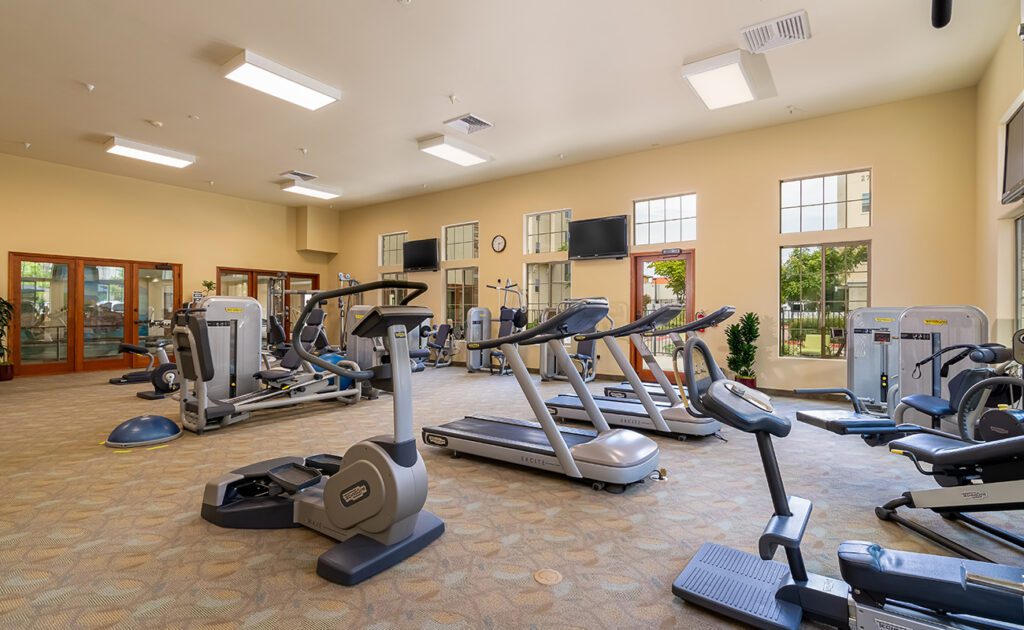
Paradise Village residents and staff, however, took great comfort in one another and rode out the electrical disruption in style.  With ample power produced from back-up generators, Paradise Village operations continued with only minimal interruption.  Central services in the Plaza, such as restaurant dining, WiFi internet, all elevators, Club Paradise wellness facilities, and most other services did not experience problems.  In fact, the camaraderie produced through the event was extremely positive!  It even caused an impromptu social hour around both the speech from President Obama and the season opening NFL football game.

“I’m so happy with the response from staff and management and the community was quite prepared to handle this problem!” exclaimed one Paradise Village resident.

Other communities in the San Diego, without generators to back up their electrical systems, did not fare as well.  With some residents stuck in elevators and complete shut down of services and amenities, these communities had a much more difficult time during these long hours.

Thanks go out to staff and residents for such a positive response to an unprecedented blackout.  Paradise Village’s design and construction proved worthy to provide residents and employees safety and security in an otherwise daunting situation.

Getting the Most From Your Doctor’s Visit by Dr. Sonia Huntley, M.D.

Let’s face it: going to the doctor is not always a pleasant experience, and in fact can be frightening, time consuming and even intimidating.  Here are six ways to make your doctor visits more comfortable and productive.

  1. The first thing to remember is that your health is your most important asset.  While spending time in a doctor’s office may not be your favorite thing to do, it is a necessity and will help you maintain staying healthy and therefore increase your quality of life.


  1. When you feel fearful about the exchange between you and your doctor, try to adopt a practical attitude.  Detach from your feelings: it’s a fact finding visit – it doesn’t have to be an emotional one.  When you can look at it with the right attitude, you will feel less intimidated and more focused on what the appointment is about.


  1. It’s a good idea to take someone with you.  Not only will there be another pair of ears to remember what was said, but you will have your own support system in place during the appointment.  They may also be able to ask the questions that elude you.


  1.     Before you arrive, make a list of problems you want to discuss. 

For example: low back pain, left side, 3 weeks – taking Tylenol or dry itchy patch on

 right cheek for3 months

Make your list precise and short – not too many problems per visit.  Give your list to the medical assistant before you see the doctor.  You will feel more in control of the situation this way and the staff will also be able to help you more efficiently.  Repeating what you have learned before the visit ends will help you remember what took place and allows the doctor to see if further explanation is needed.

  1. Be sure to ask questions and take notes.  Just like the prepared list of problems, you’ll

want your query to be simple and to the point.  Then if you write down what is being said, you can ask for clarification of a term or specific instructions before you leave.  You can also ask for handouts with more information for your specific problem.

  1. It’s a good idea to organize your own medical history.  In an emergency or upon seeing new care providers, you will be able to help track important issues.   Start by listing every medical concern you can recall for the past five years, including past surgeries and medications. For example, you can obtain clinic notes, imaging and tests, lab reports and hospital summaries.


Finally, remember that your health is the number one subject during your visit.  Following these six guidelines will optimize your time with the doctor, and you can continue to focus on what’s most important: you.